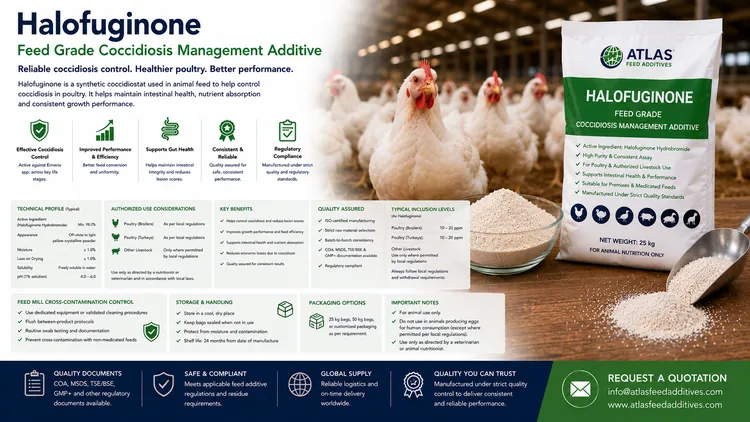
What is Halofuginone used for in animal nutrition?
Halofuginone is used only where authorized as part of professionally designed coccidiosis-management programs. It should be used according to approved species, label directions, formulation objective, veterinary or regulatory guidance, withdrawal requirements, feed mill controls, and applicable market rules.
Can Halofuginone be used in every species?
No. Halofuginone authorization varies by country, product registration, target species, feed category, animal age or production stage, maximum permitted level, withdrawal period, and restrictions for non-target animals. Buyers must confirm the destination-market rules before purchase or use.
Is Halofuginone an ordinary nutritional additive?
No. Halofuginone is a regulated coccidiosis-management product. It should not be handled like a routine nutritional ingredient. Procurement and use should be reviewed by qualified regulatory, veterinary, nutrition, and feed mill quality professionals.
What should feed mills check before using Halofuginone?
Feed mills should confirm authorization status, approved species, active assay, premix uniformity, sequencing and flushing procedures, carryover risk, cross-contamination controls, storage conditions, label requirements, withdrawal rules, and documentation requirements.
Can Halofuginone be used in rotation or shuttle programs?
Only where permitted and only under a professionally designed coccidiosis program. Rotation or shuttle use should consider farm challenge history, anticoccidial history, vaccination plan, resistance-management strategy, label restrictions, and veterinary or nutritionist guidance.
Can Atlas Feed Additives quote Halofuginone?
Yes, where legal and commercially available. Send your required specification, authorized species, target market, product registration requirements, quantity, destination, packaging preference, shipment timing, and required documents so Atlas Feed Additives can review suitable supplier options.
What quality documents should buyers request for Halofuginone?
Common documents include specification, certificate of analysis, safety data sheet, origin information, active content declaration, product registration or authorization documents, label copy, batch details, shelf-life statement, stability information, and any market-specific certificates required by the buyer or destination authority.
How should Halofuginone be stored?
Store Halofuginone products in clean, dry, secure, clearly labeled, and ventilated conditions in original closed packaging. Keep away from moisture, heat, damaged packaging, non-feed chemicals, and feeds for non-target animals. Always follow the supplier label and SDS.
What should be checked before comparing two Halofuginone offers?
Compare authorization status, approved label, active concentration, product form, carrier, assay method, species approval, withdrawal requirements, documents, packaging, shelf life, origin, Incoterm, freight route, payment terms, and whether the source is accepted in the destination market.
Can Halofuginone replace another coccidiostat automatically?
No. Coccidiostats are not automatically interchangeable. Any change should be reviewed against local authorization, target species, feed program design, resistance-management strategy, withdrawal requirements, feed mill controls, and professional veterinary or nutrition guidance.