What is L-Lysine HCl used for in animal nutrition?
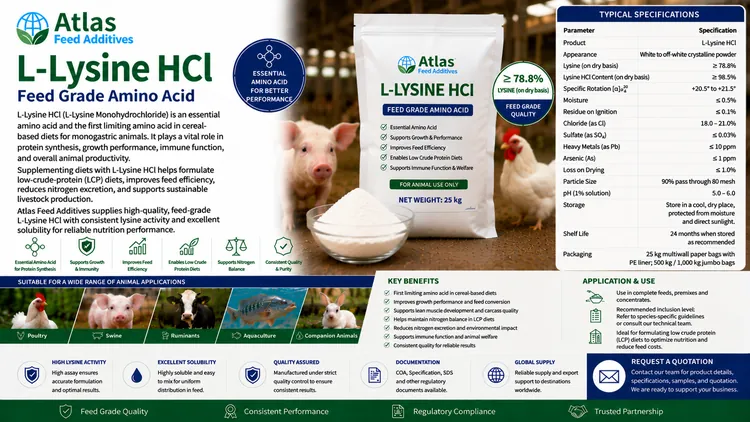
L-Lysine HCl is used as a concentrated lysine source in animal feed. It helps nutritionists balance amino acid profiles, support efficient protein nutrition, and reduce dependence on high-protein raw materials when the full diet is correctly formulated.
What is the difference between L-Lysine HCl and L-Lysine Sulfate?
L-Lysine HCl is a purified hydrochloride salt with a high lysine concentration, commonly requested as 98.5% product. L-Lysine Sulfate usually contains a lower lysine concentration and may include fermentation co-products. Buyers should compare cost per unit of digestible lysine, not only price per metric ton.
What does 98.5% L-Lysine HCl mean?
It refers to the common commercial assay target for L-Lysine HCl. Because L-Lysine HCl is a salt, the L-lysine base equivalent is lower than the product assay. A 98.5% L-Lysine HCl product is often estimated around 78.8% L-lysine base equivalent, subject to supplier declaration.
Can Atlas Feed Additives quote L-Lysine HCl?
Yes. Send your required specification, quantity, destination, packaging preference, shipment timing, and required documents so Atlas Feed Additives can review suitable supplier options for L-Lysine HCl.
What quality documents should buyers request for L-Lysine HCl?
Common documents include product specification, certificate of analysis, safety data sheet, origin information, batch details, shelf-life statement, label copy, and any market-specific certificates required by the buyer or destination authority.
Is L-Lysine HCl suitable for all species?
It should be used according to the target species, formulation objective, production stage, and applicable market rules. Ruminant use requires special review because unprotected crystalline amino acids may not bypass the rumen efficiently.
How should L-Lysine HCl be stored?
Store in clean, dry, cool, and ventilated conditions in the original packaging. Keep away from moisture, direct sunlight, damaged bags, strong odors, and non-feed chemicals. Always follow the supplier label and SDS.
What should be checked before comparing two offers?
Compare assay, lysine base equivalent, origin, manufacturer, documents, packaging, shelf life, Incoterm, freight route, payment terms, and whether the source is accepted in the destination market.