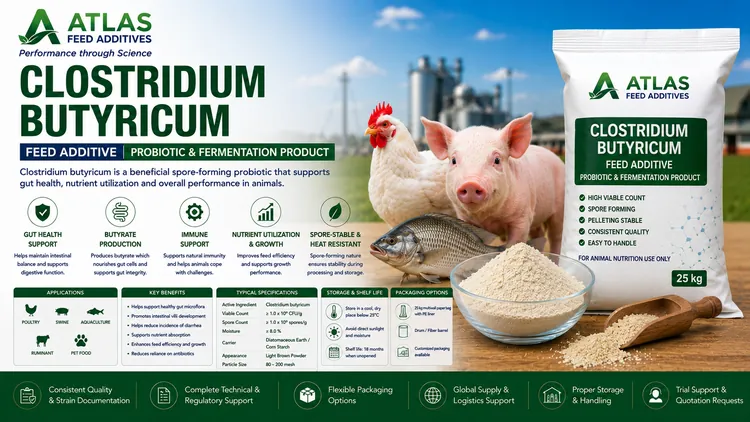
What is Clostridium butyricum used for in animal nutrition?
Clostridium butyricum is used as a probiotic and fermentation product in animal nutrition programs to help support stable digestive ecosystems, especially during feed changes, environmental stress, production transitions, and antibiotic-reduction strategies. It should be used according to target species, formulation objective, strain authorization, and applicable market rules.
Why is Clostridium butyricum described as a butyrate-producing probiotic?
Clostridium butyricum is associated with butyric acid production. In practical feed additive sourcing, this makes the product relevant for gut-focused nutrition strategies, but commercial use should still be based on the declared strain, viable count, stability data, and authorized claims in the destination market.
Can Atlas Feed Additives quote Clostridium butyricum?
Yes. Send your required specification, strain requirement, CFU/g target, quantity, destination, packaging preference, delivery terms, and required documents so Atlas Feed Additives can review suitable supplier options for Clostridium butyricum.
What quality documents should buyers request for Clostridium butyricum?
Common documents include specification, certificate of analysis, safety data sheet, strain identification, viable count result, spore count where relevant, origin information, batch details, shelf-life statement, microbial contaminant results, safety screening, and any market-specific certificates required by the buyer.
Why is strain identification important?
Probiotic safety and performance are strain-specific. Two products with the same species name may differ in stability, activity, safety documentation, legal status, and target-species evidence. Buyers should request the exact strain designation and supporting documents.
What does CFU/g mean?
CFU/g means colony forming units per gram. It is a common way to declare viable microbial activity in probiotic products. Buyers should clarify whether the CFU/g value is guaranteed at manufacture, shipment, delivery, or end of shelf life.
Can Clostridium butyricum be used in pelleted feed?
Suitability for pelleted feed depends on strain, carrier, protective technology, steam conditioning temperature, residence time, moisture, and the buyer’s process. Request pelleting stability data under conditions similar to your feed mill.
How should Clostridium butyricum be stored?
Storage should follow the supplier specification and safety data sheet. Buyers should confirm whether the product requires cool, dry, refrigerated, or ambient storage, and whether opened bags must be resealed or used within a defined period.
What contaminants should be checked?
Buyers commonly request testing for Salmonella, Escherichia coli, coliforms, yeasts, molds, Staphylococcus aureus, and other organisms required by the destination market or buyer quality system. Safety screening should also address strain-specific toxin, virulence, and antimicrobial resistance concerns.
Is Clostridium butyricum suitable for all animal species?
No universal assumption should be made. Suitability depends on strain, legal authorization, target species, feeding method, product format, and formulation goal. Confirm the intended use with supplier documentation, a qualified nutritionist, and local feed additive regulations.
How should buyers compare different Clostridium butyricum offers?
Compare strain identity, CFU/g guarantee, end-of-shelf-life activity, stability data, carrier, moisture, packaging, storage needs, process survival, contaminant testing, safety documentation, regulatory fit, and landed cost.
What information should I send for a fast quotation?
Please send the required strain if known, CFU/g target, species, feed application, order quantity, destination, packaging preference, delivery terms, and document requirements. If pelleting or extrusion is involved, include temperature and process details.