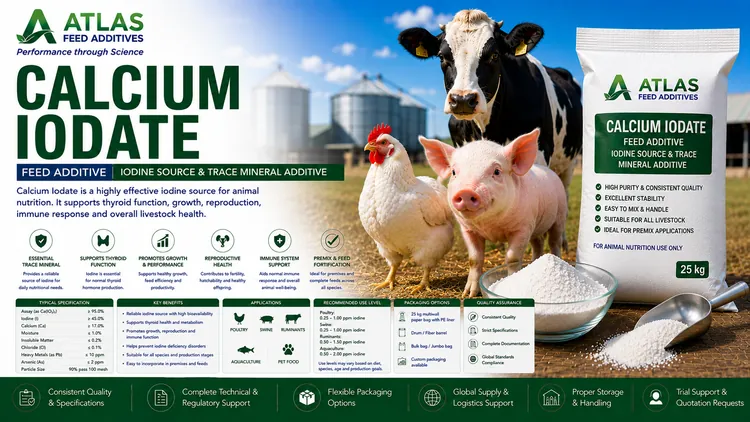
What is Calcium Iodate used for in animal nutrition?
Calcium Iodate is used as a feed-grade iodine source in animal nutrition. It is commonly evaluated for vitamin-mineral premixes, mineral feeds, compound feeds, concentrates, breeder programs, dairy and beef feeds, layer feeds, swine feeds, aquaculture feeds, pet food premixes, and specialty formulations where authorized.
Why is iodine included in animal feed?
Iodine is needed for thyroid hormone production, and thyroid hormones are linked with metabolism, growth, thermoregulation, reproduction, and productive performance. The required level depends on the animal species, life stage, production system, total diet, and local regulation.
Is Calcium Iodate a trace mineral additive?
Yes. Calcium Iodate belongs to the trace minerals and specialty minerals category. It is used as a nutritional additive when a controlled iodine source is required in feed or premix production.
Can Atlas Feed Additives quote Calcium Iodate?
Yes. Send your required specification, quantity, destination, packaging preference, and documents so Atlas Feed Additives can review suitable supplier options for Calcium Iodate.
What quality documents should buyers request for Calcium Iodate?
Common documents include specification, certificate of analysis, safety data sheet, origin information, batch details, shelf-life statement, feed-grade declaration, packaging details, and any market-specific certificates required by the buyer.
Which specification values are most important?
Important values include iodine content, calcium iodate assay, hydration form, calcium content, moisture, particle size, appearance, solubility or dispersion behavior, heavy metals, undesirable substances, shelf life, packaging, and feed-grade status.
Is anhydrous Calcium Iodate different from monohydrate Calcium Iodate?
Yes. Hydration form can affect assay calculation and declared iodine concentration. Buyers should confirm whether the supplier offers anhydrous, monohydrate, or another declared form and should compare quotations using the same specification basis.
Can Calcium Iodate be used in premixes?
Yes, it is commonly evaluated for premix use where authorized. Because it is used at low inclusion levels, accurate weighing, pre-dilution, carrier compatibility, particle-size control, and blend uniformity are important.
Can Calcium Iodate be used in all animal species?
Use depends on local regulations, species, life stage, total dietary iodine, final feed type, and customer standards. Buyers should confirm authorization in the destination market and review the intended use with a qualified nutritionist or regulatory specialist.
Does Calcium Iodate provide calcium as well as iodine?
Calcium Iodate contains calcium, but it is normally selected for iodine contribution rather than as a major calcium source. The calcium contribution can still be included in mineral accounting when required by the nutritionist.
What packaging options are commonly requested?
Buyers commonly request lined bags, cartons, drums, or palletized shipments depending on order size and handling requirements. Actual packaging depends on supplier availability, volume, moisture-protection needs, and destination requirements.
How should Calcium Iodate be stored?
Store in a cool, dry, well-ventilated area away from water, direct sunlight, excessive heat, strong odors, damaged packaging, and incompatible materials. Follow the supplier’s storage recommendation and apply first-expiry-first-out stock rotation.
How should buyers compare Calcium Iodate prices?
Compare prices only after confirming iodine content, assay, hydration form, particle size, moisture, contaminant limits, packaging, origin, certification, shelf life, minimum order quantity, freight terms, and document availability. Cost-in-use can be more important than unit price alone.
What information should be included in a quotation request?
Include target specification, required iodine content, hydration form if specified, volume, destination country, delivery terms, packaging preference, application area, required certificates, expected order timing, and any reference product or customer standard that must be matched.