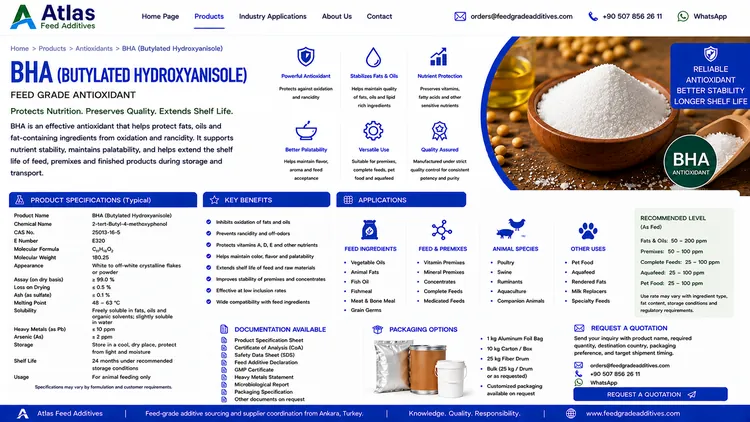
What is BHA used for in animal nutrition?
BHA helps control oxidation in fats, oils, premixes, rendered meals, pet food ingredients, aquafeed
ingredients, and finished feed where permitted. It should be used according to the target species,
formulation objective, supplier instructions, and applicable market rules.
What does BHA help protect?
BHA helps protect fat-containing materials from oxidative rancidity that can affect odor, flavor, color,
peroxide value, energy quality, and the stability of oxidation-sensitive nutrients.
Is BHA water-soluble?
BHA is generally considered practically insoluble in water and soluble in fats, oils, and several organic
solvents. For feed use, buyers should confirm whether the supplier grade is designed for oil addition,
powder premix use, or a carrier-based application.
Is BHA the same as BHT?
No. BHA and BHT are related synthetic phenolic antioxidants, but they are different substances with
different chemical identities, specifications, and regulatory conditions. They can be alternatives in some
cases, but they should not be substituted without technical and regulatory review.
Can BHA be used in premixes?
BHA may be used in premix-related applications where it is permitted and technically suitable. The buyer
should check compatibility with vitamins, minerals, carriers, flavors, pigments, and processing conditions.
Can BHA be used in fishmeal or meat meal?
BHA is commonly evaluated for fat-containing rendered meals and marine protein ingredients because these
materials can be sensitive to oxidation. Suitability depends on local rules, dosage limits, fat content,
supplier recommendations, and the buyer’s quality target.
Does BHA replace good storage practice?
No. Antioxidants support oxidation control, but they do not replace clean handling, low moisture exposure,
cool storage, oxygen control, first-expired stock rotation, suitable packaging, and raw material quality
control.
What tests can be used to evaluate oxidation?
Buyers may use peroxide value, anisidine value, TOTOX, free fatty acids, sensory checks, color, odor,
retained nutrient analysis, and shelf-life trials. The best test plan depends on the material and the
customer’s quality standard.
What quality documents should buyers request for BHA?
Common documents include specification, certificate of analysis, safety data sheet, origin information,
batch details, shelf-life statement, storage statement, and any market-specific certificates required by the
buyer or importer.
Can Atlas Feed Additives quote BHA?
Yes. Send the required specification, quantity, destination, packaging preference, preferred Incoterm, and
document requirements so Atlas Feed Additives can review suitable supplier options for BHA.
How should BHA be stored?
Follow the supplier’s safety data sheet and label. In general, feed additive antioxidants should be stored
in a cool, dry, well-ventilated area, protected from heat, direct sunlight, moisture, and contamination.
Is BHA allowed in every country?
No. Authorization, use levels, feed categories, labeling, and documentation requirements can vary by
country and application. Buyers should verify the latest local regulations before import, formulation, or
resale.