
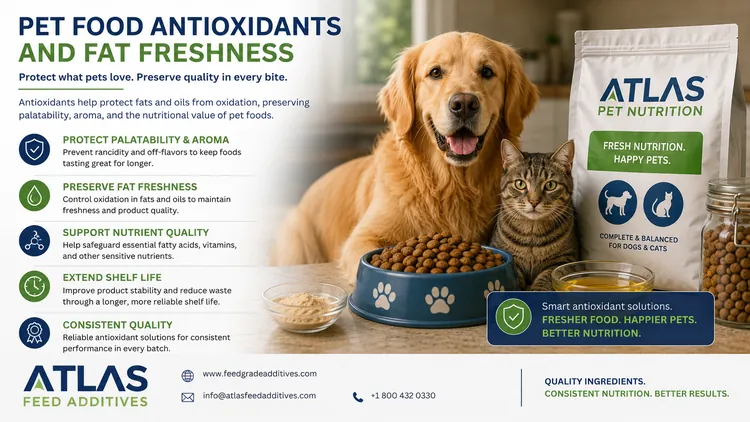
Feed additive decisions are strongest when they begin with a clear production objective. Pet Food Antioxidants and Fat Freshness is not a single-product decision; it is a practical process of matching animal needs, fat source, raw material risk, processing conditions, packaging, shelf-life expectations, and the commercial target.
Why this topic matters
Fat quality has a direct influence on pet food aroma, taste, texture, energy value, and customer perception. When fats or oils begin to oxidize, the finished product may lose freshness, develop off-odors, reduce palatability, or become less consistent during storage and distribution.
Protecting palatability, aroma, and nutrient quality in pet foods requires attention to raw material freshness, antioxidant selection, processing heat, surface coating, oxygen exposure, packaging, warehouse conditions, and shelf-life testing. In real operations, results depend on product format, species target, fat source, storage time, and how consistently the antioxidant program is applied.
Practical approach
- Review palatability, oxidation control, fat quality, aroma stability, and label consistency together rather than as separate issues.
- Use antioxidant systems suitable for the finished product format, including dry kibble, wet food, semi-moist products, treats, or supplements.
- Check fat source, peroxide value, free fatty acid level, processing temperature, coating method, packaging type, and expected shelf-life.
- Track shelf-life, aroma after storage, palatability, fat freshness, customer feedback, complaint records, and batch-to-batch consistency.
Where antioxidants fit
Antioxidants are used to help slow oxidative changes in fats, oils, meals, and finished pet food. The correct choice depends on the fat source, product format, processing method, storage temperature, label positioning, and destination-market requirements.
Some antioxidant systems are applied directly to fats or oils before they enter production, while others are used in premixes, meals, or finished feed. Buyers should review whether the antioxidant is designed for raw material protection, finished product protection, or both. Application point, dosage accuracy, mixing uniformity, and compatibility with other ingredients all affect the final result.
Fat freshness and palatability
Fresh fats can support aroma, mouthfeel, and feeding acceptance, while oxidized fats may create unpleasant odors and reduce product appeal. This is especially important in pet food because owners often judge quality by smell, appearance, and the animal’s willingness to eat the product.
For dry kibble, surface fat coating and aroma systems should be reviewed together because both can influence acceptance at the bowl. For wet products and treats, heat exposure, moisture, packaging, and ingredient interactions may be more important. A strong freshness program should connect raw material checks, antioxidant use, packaging decisions, and shelf-life monitoring.
Product groups to review
Depending on the challenge, the following product groups may be worth reviewing with your nutrition, technical, quality, or procurement team:
Buyer checklist
Before ordering, request the product specification, certificate of analysis, shelf-life, storage conditions, recommended inclusion range, packaging details, and destination-market documents. For antioxidant programs, also review active composition, carrier type, application point, heat stability, liquid or dry format, regulatory suitability, and compatibility with fats, oils, premixes, and finished recipes.
For commercial trials, define the baseline, control group, production batches, performance indicators, and review period before the additive is introduced. Useful indicators may include peroxide value, anisidine value where used, free fatty acids, aroma after storage, palatability observations, retained sample review, complaint rate, shelf-life performance, and comparison between pilot and commercial production.
How Atlas Feed Additives can support
Atlas Feed Additives can help buyers compare feed-grade additive options, coordinate supplier documentation, and structure inquiries for international shipments. We can support discussions around antioxidant type, fat freshness targets, product format, palatability direction, packaging preference, and destination-market requirements.
Send the target species, product format, current challenge, fat source, antioxidant preference if known, expected quantity, destination country, label requirements, and required documents so we can review the request efficiently.