What is Lutein used for in animal nutrition?
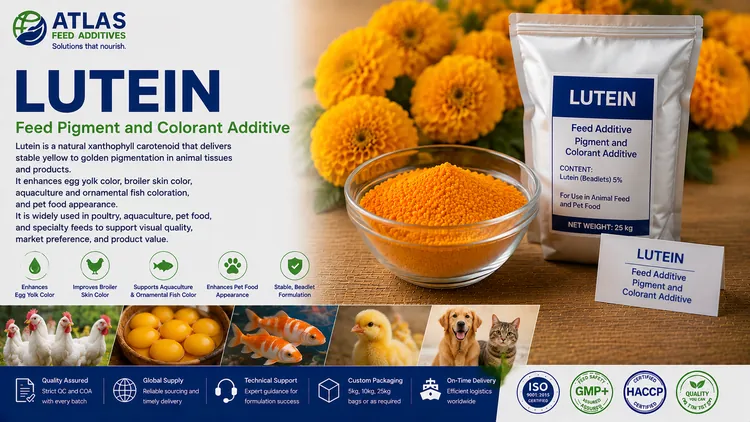
Lutein is used in programs where egg yolk, poultry skin, fish, shrimp, ornamental fish, pet food, or feed appearance color targets must be managed consistently. It should be used according to the target species, color objective, formulation design, processing conditions, and applicable market rules.
Can Atlas Feed Additives quote Lutein?
Yes. Send your required specification, active pigment concentration, quantity, destination, packaging preference, target application, and required documents so Atlas Feed Additives can review suitable supplier options for Lutein.
What quality documents should buyers request for Lutein?
Common documents include specification, Certificate of Analysis, Safety Data Sheet, pigment assay, origin information, batch details, shelf-life statement, stabilization information, packaging declaration, feed-grade statement, and any market-specific certificates required by the buyer.
Is Lutein used only for egg yolk color?
No. Egg yolk color is a major application, but Lutein may also be evaluated for broiler skin pigmentation, aquaculture feed, ornamental fish feed, pet food appearance, and specialty feed color programs where permitted.
Why is active pigment concentration important?
Active pigment concentration affects both technical performance and purchasing economics. Buyers should compare products on an active pigment basis instead of only comparing price per kilogram.
What affects final color expression?
Final color expression can be affected by active pigment dose, feeding period, species, animal age, genetics, fat level, base diet pigments, health status, absorption, product stability, and processing conditions.
Is Lutein sensitive to heat and storage?
Carotenoid pigments can be sensitive to heat, oxygen, light, humidity, and long storage. Buyers should request storage recommendations, stabilization information, and shelf-life details before purchase.
Can Lutein be combined with other pigments?
Lutein may be combined with other approved pigments such as canthaxanthin, astaxanthin, zeaxanthin, or beta-carotene depending on the color target and local authorization. Buyers should confirm permitted combinations and dosage limits in their market.
Does Atlas provide dosage recommendations?
Atlas Feed Additives supports sourcing, documentation, and quotation coordination. Inclusion rates and color-program design should be determined by qualified nutrition professionals according to species, target color, product specification, supplier guidance, and local regulations.
What information should I include in my quotation request?
Please include required active concentration, target species, color objective, product form, quantity, destination, packaging preference, processing method, Incoterms, and required documents. A previous specification sheet or COA is helpful when available.