
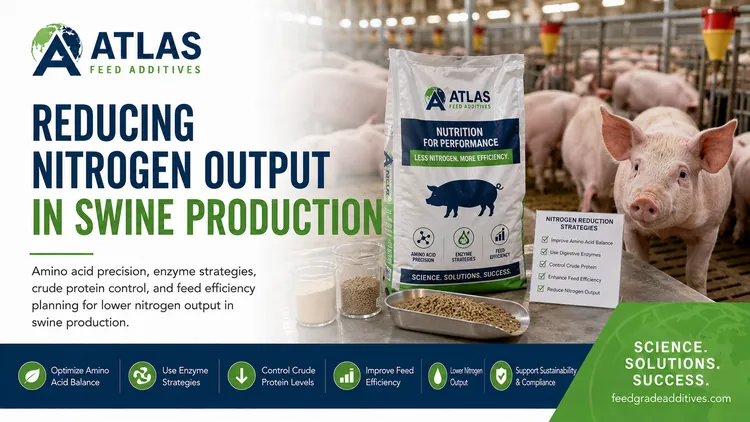
Feed additive decisions are strongest when they begin with a clear production objective. Reducing Nitrogen Output in Swine Production is not a single-product decision; it is a practical process of matching amino acid balance, crude protein targets, raw material digestibility, feed manufacturing conditions, animal performance, and the commercial target.
Why this topic matters
Amino acid precision and enzyme strategies can help lower nutrient waste by improving how pigs use dietary protein and energy. When crude protein is higher than necessary, unused nitrogen can increase manure nitrogen load, ammonia pressure, feed cost, and environmental management challenges without improving performance.
In real operations, the result depends on feed quality, genetics, production phase, ingredient digestibility, health status, housing, water access, manure handling, storage, and how consistently the additive is applied. A nitrogen-reduction program should therefore connect nutrition, feed manufacturing, performance records, and manure observations rather than rely on one product alone.
Key areas to review
Swine nitrogen output should be reviewed by production phase because nursery pigs, growers, finishers, gilts, sows, and boars have different nutrient needs. A diet that reduces crude protein without maintaining the correct amino acid pattern can reduce performance, so precision formulation is essential.
- Amino acid balance: lysine, methionine, threonine, tryptophan, valine, isoleucine, and other amino acids should be reviewed against phase-specific targets.
- Crude protein level: reducing excess protein should be done carefully and supported by digestible amino acid formulation.
- Ingredient digestibility: soybean meal, alternative proteins, cereals, by-products, and fiber sources can change nitrogen utilization.
- Enzyme support: protease, phytase, carbohydrase, or multi-enzyme programs may be reviewed where ingredient variability or digestibility limits are present.
- Manure and barn conditions: manure consistency, odor, ammonia pressure, litter or slatted-floor management, and ventilation should be monitored with nutrition changes.
Practical approach
A practical nitrogen-reduction program starts by defining the objective: lower manure nitrogen, better feed conversion, reduced feed cost, improved barn air quality, more precise amino acid supply, or support for sustainability reporting. Once the objective is clear, the nutrition team can decide whether formulation changes, crystalline amino acids, enzymes, fiber strategy, or other support tools are relevant.
- Separate nursery, grower, finisher, gilt, sow, and breeder objectives instead of using one crude protein target for all pigs.
- Use amino acid balancing, enzymes, palatability tools, acids, fibers, and micronutrients as a coordinated program.
- Review raw material analysis, digestibility assumptions, feed processing, pellet quality, and mixing accuracy before changing the formula.
- Measure intake, average daily gain, feed conversion, mortality, medication records, manure consistency, and barn air observations.
- Compare results against a clear baseline and review enough batches or groups before scaling changes across the full production system.
Feed formulation and additive considerations
Reducing nitrogen output usually begins with more precise protein formulation. This may include lowering unnecessary crude protein while maintaining digestible amino acid supply with selected amino acids and high-quality protein sources. The goal is not simply to reduce protein, but to improve the match between nutrient supply and animal requirement.
Enzymes can support this approach when they improve access to nutrients in raw materials or reduce the impact of ingredient variability. Product selection should consider diet composition, processing temperature, target substrate, expected response, supplier documentation, and compatibility with other additives in the premix or complete feed.
Feed manufacturing and farm management considerations
Precision feeding requires accurate manufacturing. Low-inclusion amino acids and enzymes should be weighed, mixed, and distributed consistently so pigs receive the intended nutrient profile. Segregation, poor mixing, incorrect batching, or unstable storage can reduce the value of a carefully formulated diet.
Farm management also influences nitrogen efficiency. Feed wastage, incorrect feeder adjustment, poor water access, heat stress, disease pressure, overcrowding, and uneven pig weights can reduce nutrient use efficiency. Additives should support good management rather than compensate for avoidable losses.
Evaluation and performance monitoring
Changes intended to reduce nitrogen output should be evaluated with both performance and manure-related indicators. If crude protein is reduced too aggressively or the amino acid pattern is incomplete, pigs may lose growth rate or feed efficiency. If the program is balanced well, the farm may maintain performance while improving nutrient efficiency.
Useful records include formulation changes, raw material analyses, feed deliveries, feed conversion, growth rate, mortality, medication use, manure consistency, barn odor observations, ammonia checks where available, and feed cost per kilogram of gain. These records make it easier to separate additive response from normal farm variation.
Product groups to review
Depending on the challenge, the following product groups may be worth reviewing with your nutrition, technical, environmental, or procurement team:
Buyer checklist
Before ordering, request the product specification, certificate of analysis, shelf-life, storage conditions, recommended inclusion range, packaging details, handling guidance, and destination-market documents. For commercial trials, define the baseline, control group, feed batches, performance indicators, and review period before the additive is introduced.
For nitrogen-reduction projects, also share the production phase, current crude protein levels, amino acid targets, raw material base, enzyme program, feed form, performance baseline, manure concerns, expected quantity, processing conditions, and whether the product will be used in premix, complete feed, or another delivery format. This helps suppliers and technical teams recommend options that fit the actual swine program.
How Atlas Feed Additives can support
Atlas Feed Additives can help buyers compare feed-grade amino acid, enzyme, acidifier, and swine performance additive options, coordinate supplier documentation, and structure inquiries for international shipments. Send the target application, current challenge, species, production phase, product group, expected quantity, destination country, and required documents so we can review the request efficiently.