
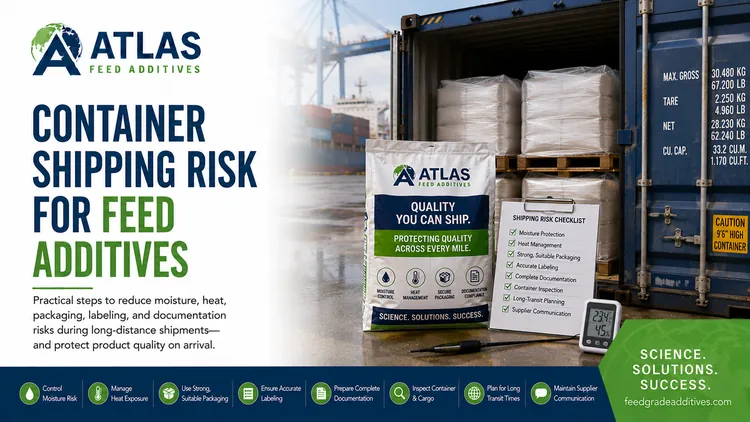
Feed additive decisions are strongest when they begin with a clear production objective. Container Shipping Risk for Feed Additives is not a single-product decision; it is a practical process of matching product sensitivity, packaging strength, shipment route, storage conditions, import documentation, and the commercial target.
Why this topic matters
Moisture, heat, packaging, and documentation risks can affect feed additives during long transit. A product may leave the factory within specification, but poor container condition, weak palletizing, humidity exposure, high temperature, or missing paperwork can create delays, claims, or quality concerns at destination.
In real operations, shipping risk depends on the product form, active ingredient stability, bag material, pallet protection, route length, transshipment points, seasonal weather, port handling, customs requirements, and how clearly responsibilities are defined between buyer, supplier, freight forwarder, and importer.
Practical approach
- Plan documentation, packaging, labeling, pallet format, and destination requirements before shipment is booked.
- Review whether the additive is sensitive to moisture, heat, pressure, odor transfer, or long storage inside a closed container.
- Use packaging that fits the product risk, such as lined bags, moisture barriers, sealed drums, shrink-wrapped pallets, or container desiccants where appropriate.
- Agree on inspection, loading photos, container number, seal number, batch documents, and claim procedure in advance.
- Check shelf-life, production date, transit time, and expected arrival date so the product remains commercially usable after import clearance.
Key shipping risk points
Moisture is one of the most common concerns for hygroscopic powders, premixes, vitamins, minerals, and specialty additives. If moisture enters the package, it can cause caking, flow problems, discoloration, reduced handling quality, or customer rejection. Heat can also be important for sensitive ingredients, especially when containers pass through hot ports or remain exposed on terminals.
Physical damage should also be considered. Torn bags, collapsed pallets, poor stacking, sharp pallet edges, and loose loading can create losses even when the product itself is stable. Clear loading standards and photo records help buyers and suppliers confirm that the shipment was prepared correctly before the container leaves origin.
Documentation and compliance
Documentation risk can be just as costly as physical damage. Product names, batch numbers, HS codes, country of origin, net weight, labels, certificates, invoice details, packing list information, and destination-specific declarations should be checked before dispatch. Small mismatches can create customs delays or additional storage costs.
For regulated markets, buyers should confirm whether the shipment requires a certificate of analysis, safety data sheet, origin declaration, free sale certificate, halal documentation, non-GMO declaration, health certificate, or other market-specific documents. These requirements should be agreed before payment and production planning, not after the container has shipped.
Product groups to review
Depending on the challenge, the following product groups may be worth reviewing with your nutrition, technical, logistics, or procurement team. Sensitive additives should be evaluated not only by price and specification, but also by packaging, transit route, document readiness, and destination handling conditions.
Buyer checklist
Before ordering, request the product specification, certificate of analysis, shelf-life, storage conditions, packaging details, recommended handling instructions, batch traceability, safety data sheet, label copy, and destination-market documents. Confirm whether the supplier can provide loading photos, pallet details, container inspection notes, and final document drafts before shipment.
For commercial shipments, define the agreed Incoterms, payment terms, loading deadline, shipment route, insurance responsibility, inspection process, document approval timeline, and complaint handling procedure. This makes it easier to manage delays, prevent misunderstandings, and protect both product quality and commercial value.
Inspection and arrival review
At origin, a basic inspection may include container cleanliness, dryness, odor, floor condition, pallet integrity, bag condition, label accuracy, and seal number. At destination, buyers should check container condition, visible moisture, damaged pallets, product appearance, batch numbers, and whether the received documents match the shipment.
If a problem is found, photos should be taken before unloading is completed, and the supplier, freight forwarder, insurer, and relevant inspection party should be informed quickly. Clear records improve the chance of resolving quality, shortage, or damage claims fairly.
How Atlas Feed Additives can support
Atlas Feed Additives can help buyers compare feed-grade additive options, coordinate supplier documentation, and structure inquiries for international shipments. Send the target application, current challenge, additive group, order volume, destination country, required documents, and preferred shipment terms so we can review the request efficiently.