What is Palatability Blend used for in animal nutrition?
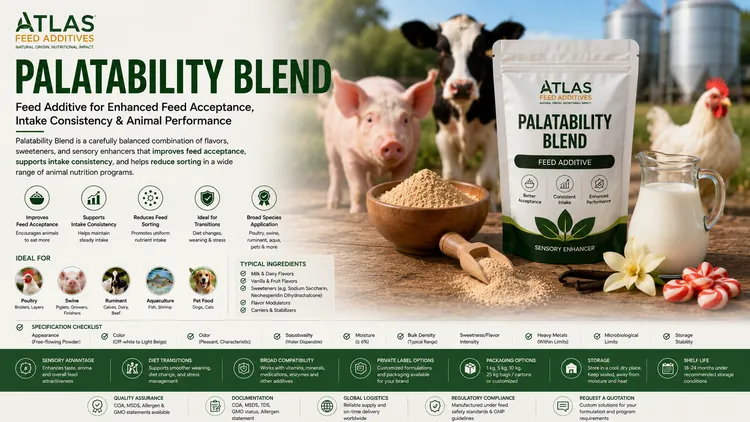
Palatability Blend supports feed acceptance, intake consistency, sensory appeal, taste masking, and formulation transitions for sensitive feeding phases. It should be used according to the target species, feed type, formulation objective, supplier instructions, and applicable market rules.
Which species can use Palatability Blend?
Palatability Blend may be evaluated for piglets, calves, ruminants, poultry, aquaculture, pets, horses, rabbits, and specialty feeds. Suitability depends on species preference, feed form, inclusion rate, sensory profile, production stage, and destination-market authorization.
Can Palatability Blend be used in piglet feed?
Yes. Palatability blends are commonly evaluated in creep feed, prestarter, starter, and post-weaning diets where early feed intake and smoother diet transitions are important. Buyers should select a profile and dose appropriate to the formula and age group.
Can Palatability Blend be used in calf feed?
Yes. Palatability blends may be considered in calf starters, milk replacers, young ruminant feeds, and transition products. Milk, vanilla, cream, sweet, or custom profiles may be evaluated depending on the buyer's program.
Can Palatability Blend be used in pet food?
Yes. Palatability products may be evaluated in pet foods, treats, powders, tablets, chews, and specialty companion-animal products. Pet food applications often require species-specific sensory testing, label review, and compatibility with processing conditions.
Can Palatability Blend mask bitter or mineral notes?
Palatability Blend may help mask undesirable notes from minerals, alternative ingredients, organic acids, botanicals, medications where permitted, or raw-material changes. The correct blend depends on the specific off-note, species, feed form, and inclusion rate.
Is heat-stable Palatability Blend required?
Heat stability is important when the product will pass through conditioning, pelleting, drying, or extrusion. Buyers should share expected processing temperatures and request stability or aroma-retention information from the supplier.
What quality documents should buyers request for Palatability Blend?
Common documents include a specification sheet, certificate of analysis, safety data sheet, sensory profile statement, recommended inclusion guidance, batch number, manufacturing date, expiry date, storage instructions, origin information, and any market-specific certificates required by the buyer.
Can Atlas Feed Additives quote Palatability Blend?
Yes. Send your target species, feed type, desired sensory profile, main palatability challenge, required quantity, destination country, packaging preference, shipment terms, and documents so Atlas Feed Additives can review suitable supplier options.
What should I include in the message when requesting a price?
Please include the target species, feed form, desired sensory direction, inclusion rate if known, processing temperature, order quantity, destination country, packaging preference, required documents, and whether the product is for resale, premix production, private label, or direct feed mill use.
Can Palatability Blend be supplied under private label?
Private-label availability depends on supplier capability, order quantity, packaging format, label wording, sensory declaration, artwork approval, and destination-market rules. Atlas Feed Additives can review private-label options when the buyer provides the required label and regulatory details.