What is Neohesperidin Dihydrochalcone used for in animal nutrition?
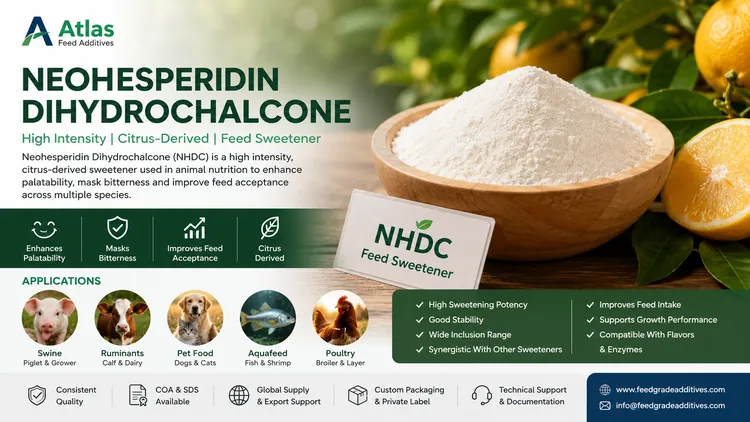
Neohesperidin Dihydrochalcone is used as a high-intensity feed sweetener, flavor enhancer, and palatability-support ingredient. It can support feed acceptance, intake consistency, bitter-note masking, and formulation transitions when used according to the target species, feed type, supplier instructions, and local rules.
What does NHDC mean?
NHDC is a common abbreviation for Neohesperidin Dihydrochalcone. Buyers may also see names such as Neohesperidin DC or neohesperidin dihydrochalcone. The exact permitted label name should be confirmed for the destination market.
Is NHDC used only for sweetness?
No. NHDC can provide sweetness, but it may also be used for bitter-note masking, flavor rounding, sensory enhancement, and palatability support in difficult feed formulas.
Which species can use Neohesperidin Dihydrochalcone?
NHDC may be evaluated for piglets, calves, poultry, ruminants, aquaculture, pets, horses, rabbits, and specialty feeds when it is authorized and technically suitable. Suitability depends on species preference, dose, feed form, sensory objective, and destination-market rules.
Can NHDC be used in piglet feed?
Yes, NHDC may be considered in creep feed, prestarter, starter, nursery, and post-weaning diets where sweetness, bitter masking, or feed acceptance is important. Buyers should select the dose and blend according to the final formula and supplier guidance.
Can NHDC be used with sodium saccharin?
Yes, NHDC may be used with sodium saccharin or other sweetener systems when compatibility, label rules, and sensory targets are aligned. Combination products should be evaluated in the actual feed formula.
Is NHDC heat stable?
NHDC is generally known for good stability compared with some sensitive sweeteners, but buyers should still request supplier-specific stability data for pelleting, extrusion, drying, liquid application, and long storage conditions.
What specification should buyers request?
Buyers should request product identity, assay, purity, CAS number where needed, physical form, carrier declaration, particle size, bulk density, solubility, sensory profile, recommended inclusion rate, shelf life, storage conditions, and required documents.
What quality documents should buyers request for Neohesperidin Dihydrochalcone?
Common documents include a specification sheet, certificate of analysis, safety data sheet, assay declaration, batch number, manufacturing date, expiry date, storage instructions, origin information, contaminant statements, and any market-specific certificates required by the buyer.
Can Atlas Feed Additives quote Neohesperidin Dihydrochalcone?
Yes. Send your required specification, assay, product form, target species, application, required quantity, destination country, packaging preference, shipment terms, and documents so Atlas Feed Additives can review suitable supplier options.
What should I include in the message when requesting a price?
Please include target species, feed form, assay requirement, product form, sensory objective, order quantity, destination country, packaging preference, required documents, and whether the product is for resale, premix production, private label, or direct feed mill use.
Can Neohesperidin Dihydrochalcone be supplied under private label?
Private-label availability depends on supplier capability, order quantity, packaging format, label wording, sensory declaration, artwork approval, and destination-market rules. Atlas Feed Additives can review private-label options when the buyer provides the required label and regulatory details.