
Feed additive decisions are strongest when they begin with a clear production objective. Traceability Records for Feed Additive Shipments is not a single-product decision; it is a practical process of matching animal needs, raw material risk, feed manufacturing conditions, destination-market requirements, and the commercial target.
Why this topic matters
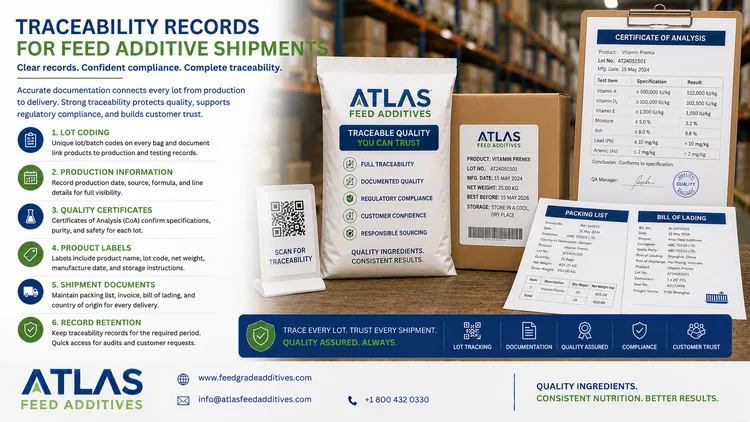
Lot codes, production dates, and documents matter because feed additive shipments often move through several hands before reaching the feed mill, premix plant, farm, or distributor warehouse. Clear traceability helps buyers connect each delivered product with its supplier, production batch, certificate of analysis, shelf-life, storage requirement, and shipment record.
In real operations, traceability supports quality control, complaint handling, stock rotation, recall readiness, and internal audits. If a product question appears later, a well-organized record system makes it easier to identify the affected lot, check the documents, review storage history, and separate related stock if needed.
Records to keep with each shipment
A practical traceability file does not need to be complicated, but it should be complete enough for purchasing, warehouse, quality, and technical teams to follow the product history. The goal is to avoid gaps between the product label, supplier documents, commercial invoice, packing list, and warehouse receiving record.
- Product identity: product name, additive group, grade, active level, supplier name, and manufacturer information when available.
- Batch details: lot code, batch number, production date, expiry date, shelf-life, and package count.
- Quality documents: certificate of analysis, product specification, safety data sheet, label, and storage instructions.
- Shipment documents: invoice, packing list, transport details, pallet or container references, and destination-market documents.
- Receiving records: arrival date, quantity received, packaging condition, warehouse location, and internal stock code.
Practical approach
A practical approach starts before purchase. Buyers should confirm which documents are needed for the product group, destination country, customer, and intended use. This is especially important when a shipment includes sensitive additives, regulated claims, species-specific permissions, or products with strict storage requirements.
- Claims, use levels, species permissions, and label expectations can vary by destination market.
- Keep product labels, technical sheets, and commercial documents aligned with local requirements.
- Confirm sensitive additives before purchase and use, especially when the product will cross borders.
- Match each certificate of analysis to the correct lot code and shipment quantity.
- Use first-in, first-out stock rotation and keep records of any damaged, returned, or isolated goods.
Warehouse and stock control
Traceability continues after delivery. Warehouse teams should record where each lot is stored, whether packaging is intact, and whether the product is being held under the recommended conditions. Temperature, humidity, sunlight exposure, and damaged packaging can all affect product quality, especially for vitamins, pigments, enzymes, probiotics, antioxidants, and other sensitive additives.
When one product arrives in multiple lots, the lots should remain clearly separated in the record system. If partial bags or opened containers are used, teams should record the opening date and close the packaging properly after use. These simple steps help prevent mix-ups and make later checks easier.
Product groups to review
Depending on the challenge, the following product groups may be worth reviewing with your nutrition, technical, quality, or procurement team:
Buyer checklist
Before ordering, request the product specification, certificate of analysis, shelf-life, storage conditions, recommended inclusion range, packaging details, and destination-market documents. For commercial trials, define the baseline, control group, feed batches, performance indicators, and review period before the additive is introduced.
For shipment traceability, also confirm the lot code format, label language, production and expiry date format, document issue date, product origin, package size, pallet count, and whether the documents must mention a specific customer reference, purchase order, or destination requirement.
How Atlas Feed Additives can support
Atlas Feed Additives can help buyers compare feed-grade additive options, coordinate supplier documentation, and structure inquiries for international shipments. Send the target application, current challenge, product group, quantity, destination country, required documents, and any label or traceability expectations so we can review the request efficiently.